
Maintaining your mental and physical health as a business owner

Updated: Mar 5
First, what are the goals of this blog post? It’s all about giving you a place to start so you can give your body and mind what it needs so you, as a busy professional, don’t burn out or lose your mind. Being a real estate photographer I can feel I’m always on the clock because I can always be doing something to further my business, my skills, my systems, or any number of things to improve. This blog is to help you get out of that space so you can have a break. I’ll be going through various exercises, stretching, and meditation. But let me be the first to say, the idea of always improving, learning something new, whether it’s inside your business, or in the case of the this blog, outside your business, can feel exhausting at times. I will be the first person to say, ‘maybe I just need to do nothing today,’ and that is one hundred percent an option. Keep in mind that all of the things I’m talking about can snap most people out of a funk. Piers Morgan asked Chris Williamson a question on his show, ‘Mental strength or physical strength?’. Chris considers the question for a moment and says, ‘Physical strength, mental strength is downstream from it. Trying to think your way out of overthinking is like sniffing you way out of a cocaine addiction. You can’t really change the mind with the mind you have to do it with the body first. Going for a walk will do way more for your mood than sitting and thinking about whatever you’re dealing with.’ This is exactly right and it’s what I’ve come across ad nauseam with inspirational quotes and research.
Without getting too deep we can also start with a great joke that puts the icing on the cake for the topic of this blog. A joke by the great Pete Holmes, check it out....
Jump to a section:
“Thinking and talking about your problems literally make the problems grow. It’s the number one symptom of depression: rumination. The pathological obsessing over you problems and pain. That’s why exercise, running errands, ultimately accomplishing anything is good for you. Break out of the rumination pattern and start where you can start.”
-Abigail Shrier (From Joe Rogan Podcast 2109)
It’s seems, action, or physically getting moving, in whatever form, influences the mind more than any amount of thinking ever could. This is why I think this blog post is so important. The body-mind connection is so profound, to this day, scientists and academics don’t understand it fully. But I think we know it by the way we feel. So without further ado let’s get started!
First, two small pieces of advice, start where you can start and go where you’re least interested. It is often the case our answers lie in the places we least want to look or simply getting the ball rolling is how to build momentum towards your goal. In addition to that, don’t try to implement everything all at once. You probably have lots of things to do and I recommend getting good at one, maybe two things at a time and add things on as you go. Think back to when you were first starting your business and trying to get everything off the ground. Setting things up took the most amount of time, but once it’s there you can make adjustments much more quickly. Whether it was your website, bookkeeping, CRM, marketing, networking, etc. It might take some time at first, but it gets much easier as you keep going. Learning new things takes some time. So start with 1 or 2 things and add on from there.
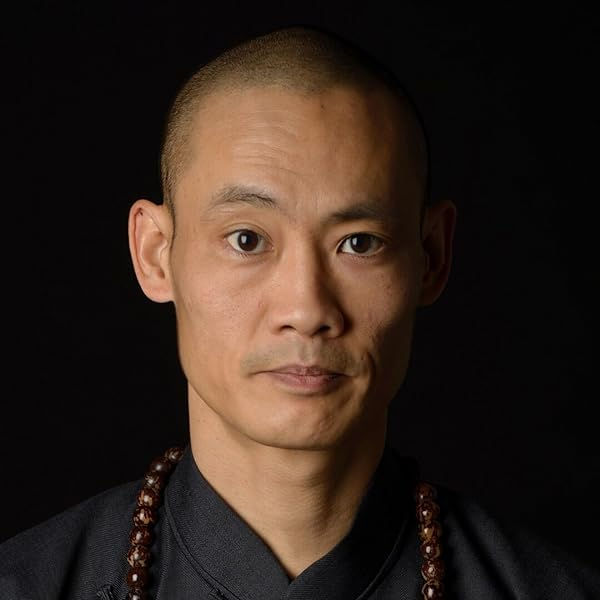
“As long as your body is healthy, you have thousands of problems. But in the moment your body gets sick, you have one problem. So before you tackle anything else, make sure your body is healthy.”
-Master Shi Heng Yi
Researching for this blog post was far more work then I had anticipated. This could be because I’m a person that likes to dive deeply into things or that I genuinely care for other business owners that burn out, tire out, and otherwise struggle to maintain a work-life balance. Being a real estate photographer, I know better than anyone outside of the real estate profession how stressful the real estate industry can be. Tight deadlines, antsy clients, negotiations getting heated, oh, and you forgot to plan something for dinner and you stayed up late last night finishing paper work. Things can, and will pile up at times and this blog post is meant to take a dive into turning off, relaxing, taking care of yourself, or simply doing nothing so your brain can have a rest.
So let’s go through everything I’ve managed to dig up. This post is structured into various sections, some of which overlap: Physical health, mental health, and hobbies (coming soon).
Physical Health
Weightlifting
The benefits of weightlifting cannot be understated, for both body and mind. As soon as you start, your metabolism goes up. This means you burn more of the energy that would put on extra pounds. After a few sessions other things in life become easier because you’re stronger, and overall, feel a lot better. A note for the women reading this. No, you won’t become the incredible hulk, not even close. Men, you also won’t become the incredible hulk, you need a different workout regimen then what I’m about to recommend, but both men and women will build strength with what I have here. With that out of the way...
The single best video I’ve been able to find on weight lifting can be found here...
The expert talking in this video is Pavel Tsatsouline, a quick google search will reveal everything you need to know why he’s an expert in this field. To summarize this video, you want to do “spaced practice” not “mass practice”. The analogy used is that if you’re learning something like a new language, you want to go through a small amount of material, walk away for 5 to 10 minutes and then try to recall this information again. We do the same with weight lifting.

Everything I’m about to go through is in the video, but if you decided not to watch, it’s all here. To start, you want to lift 80% of your one rep max. You should be able to do 8 reps to failure with that 80%. If you’re just starting out and you don’t know what your one rep max is, experiment and see what you can handle. But when in doubt, lift lighter, especially in the beginning so you don’t overdo it. The additional good news about this protocol is it’s meant to not push your limits. If it’s been a while since you last hit the gym, your muscles need to adapt to lifting some weight, so give them a little time. The worst thing anyone can do is go too hard, too early. Piling on an intense workout with your first workout is a recipe for failure, injury, and demotivation, don’t do it.
First, lift 80% of your one rep max. Second, you’ll do 3-4 reps of 5 sets and rest for 10 minutes between sets. You can do up to 2 other exercises in that 10 minute rest. So you could bench press and start resting, 3 minutes and 33 seconds later do bicep curls, another 3 minutes and 33 seconds later you do lateral raises, once your ten minutes are up do another bench press and repeat for 5 sets. That’s your exercise for the day, done! Total time is 50 minutes.
Slight Adjustments For A Faster Workout
This regimen, which is very similar to the above, I got from the book The Four Hour Body. Pavel Tsatsouline was also involved in the research of this book. Here’s the slightly different routine...
If you're interested in further reading, the four hour body is a great book and you can buy it on amazon. For full disclosure, this is an amazon affiliate link and I get payed when people us it. https://amzn.to/45xzSnS
Lift 80% of your one rep max and use the rule of 10. In all weight lifting, focus on sets of 2 or 3 reps (3 sets of 3 reps or 5 sets of 2 reps). Take a five minute rest in between each set and you can do an additional lift in the 5 minute rest.
Important Note: If you need to make your weight lighter as you go, then do it. If you find yourself lifting until failure, you’re lifting too much weight.
This regimen is used specifically with athletes that need to practice hard else where so they don’t have muscle ache or weakness. A professional athlete wouldn’t want to be sore or slowed down from weight lifting while they do what they do best. So it works perfectly for a busy professional. You don’t want to be slowed down either.
I Know Your First Question. Home Gym? What Equipment? Or Gym Membership?
Gym memberships are pretty straight forward. Look at public gyms, private gyms, location, services, etc and see what works best for you. You may want to start with something cheap, easy, and convenient or something involved with a trainer. This is up to you, your budget, and location. But the idea of this particular blog post is for things to be as easy as possible, so a home gym is what I’d generally recommend. There’s no wasted time between working out and getting back to work
The first piece of equipment that’s versatile and easy to use is a weighted vest. Try and get one that can be maxed out to 60 lbs/ 27.2 kg. Because this blog post will be seen by my local business professionals in Calgary, I’ve linked fitness supply stores in Calgary that have various weighted vests. You can use the weighted vest for lunges, push ups, pull ups, sit ups, walks, and use it as a dumb bell. For approximately $200 CAD there isn’t much you can’t do with a weighted vest. If there’s a time where you out grow your weighted vest and you’re just not getting enough weight anymore, it might be time for a serious home gym or a gym membership.
After doing some research I've also found a great weighted vest on amazon. If you're inclined, you can buy it at my affiliate link here... (I get payed if this link is used, thank you for your support if you do :D )
If you're looking for adjustable dumbbells, the following are very well reviewed on amazon. This is also an affiliate link and I get a kick back for any purchases.
The only other two pieces of equipment I’d recommend are a pull up bar and dumb bells. Again, shopping at local fitness supply stores is your best bet. To save on space in your home gym, adjustable dumb bells are a must. I don’t see much sense in getting a large rack of weights when you only use a couple of them, especially when you’re starting out. For less then half the price you can get adjustable dumb bells that’ll last a life time. If you ever out grow them, they tend to make an easy sell online. Speaking of which, don’t forget to check out people selling equipment online as well.
Short Story #1 + Book Recommendation
I have no idea how I cam across Tim Ferriss’s book ‘The Four Hour Body’ but it was back in 2015/16 on a cruise ship. I was working as a photographer on The Pacific Dawn with P&O Australia. My cabin neighbour happened to be the fitness instructor and I had a couple of colleagues that were also into fitness. Thanks Ryno! So on our turn-around day in Brisbane we were bused into Queen Street Mall where I had ordered Tim’s book and picked it up at the book store. Since then, all the information from this book has been restated, with slight variations, and has been proved right by all other sources I come across. If there’s a book you should get on health and fitness, check out The Four Hour Body. I had someone on the cruise ship ask if I was alright, health wise, because I lost so much weight so quickly. I can’t say enough bout this book.
Stretching
Here’s the great thing about stretching. You can simply do what you know, hold those stretches for 60 seconds and you’re good to go. In addition to that, stretching is the least needed as far as general health goes. However, it also feels better than any exercise. I played a ton of sports growing up so I remember a lot of different stretches. I’ll do a series of them and stretch out most of my body and it feels like I was at the massage therapist after 45 minutes. It’s incredibly relaxing after the fact. If you don’t have a goal in mind when it comes to stretching, simply feeling good is good enough for me!
But because I’m no expert, and describing how to do a stretch via text would be awfully wordy, I’ll link several videos.
A Professional Surfers Opinion
But first, a word from one of the greatest athletes of our time, Laird Hamilton. Laird is a big wave surfer that has trained top NBA, NHL and NFL players and he routinely out jumped, out ran, and out lifted most of them. His approach to training in as few words as possible is... “Anyone hitting weights should be doing yoga (stretching) and anyone doing yoga should be hitting weights. These two activities aren’t exclusive, they support one another.” So without further distraction, let’s get stretching!
Back to Stretching
This first video is from a Youtube channel called Workouts By David and Movement by David, he’s one of the best in the business when it comes to stretching and he has lots of great videos to get you started. One strategy you can employ is stretch where you have the most problems. I have the most problems in my shoulders, neck, and inner thigh, so I focus on those areas first. You also may not know you have problems until you start stretching, so give all the videos a try and see what you can work on.
Here are some things to keep in mind when you stretch. These points are mentioned in the videos but I’ll summarize here. These points are here for quick viewing and you can copy and paste into notes yourself.
Keep these few things in mind when stretching...
Breath. In through the nose, out through the mouth. Big breaths, not shallow ones.
You still might be tensing your muscles while stretching, not getting a whole stretch in. Think about and feel what you’re doing during the stretch. Relax the muscles you’re stretching as well as surrounding muscles so you can truly get a good stretch.
Stretching too hard can cause harm. Don’t force a stretch, once your muscle is stretching, leave it. You should feel tension, not pain. When you do it again you’ll notice a larger range of motion and you can stretch deeper the second time around.
This may be the only video you’ll ever need, so start here...
Hamstring Scoops
10 times, each side
Hamstring Scoops (alternating each side)
10 for each side
Hip circles
5 reps each leg
Arm circles
10 rotations forward and back
The roll down
Nice and slow, 2 reps
Runners lunge pulse
15 reps per leg
The horse stance
Try and go for 30 full seconds, once
A more difficult variation is having your hands out in front of you
Single Leg RDL
10 reps per leg
Chest pulses
Go for 30 seconds of pulses, take breaks if you can’t make it non-stop
Cat-Cow Stretch
5 reps
Single Leg Hamstring Stretch
Hold for 30 seconds each leg, 2 times
DON’T FORGET TO BREATH!
Butterfly Stretch
Hold for 30 seconds, break for a moment and hold another 30 seconds
Low Hip Flexor Lunge
Hold for 30 seconds, each leg, 2 reps
Alternating between Bridge stretch & Pike Stretch
Hold Bridge for 30 seconds
Hold Pike for 30 seconds
Repeat bridge and pike one more time
The End!
Alternative Stretching, If You’d Like a Shorty Session
The next couple of videos are shorter and have some of the same stretches. But if you didn’t want the whole half an hour regimen above, these videos should also be well suited for a beginner.
You can add more stretches from other videos as you go.
Hip Flexor Stretch (lunge)
A great stretch if you sit a lot, whether at a desk, in the car, etc.
Elephant Walks (Hamstring stretch)
Pancake Stretch
Figure Four Stretch (Piriformis stretch)
Great for lower back (desk work anyone?) and cannot be ignored if you have problems with your sciatica
Lat Stretch
It’s common to have your lats tight because we don’t normally use them at their full range of motion.
Side Stretch
David made a second video a few years later on his second channel Workouts By David, some of the stretches are the same, some with variations, so you can incorporate several movements and stretches from both videos or rotate between them. Combining the two should give you about a half hour stretch session. Which is a great starting point!
The additional stretches David performed in this second video are as follows
Hamstring Choke for Warm Up
Hurdler Hamstring Stretch
Pigeon Pose Stretch (modified)
Cross-legged lower back stretch
Upward dog stretch
Pike Stretch
Pancake stretch V2 (Walk side to side)
Meditation
Hold on! Don’t go anywhere! I know what kind of reputation meditation has, it’s not all going ‘ohm’ and having your fingers pinched together while sitting cross-legged. There is that part yes, but it’s much more intuitive and easier to explain then hippie-woo-woo getting in touch with your spirit type stuff.
First, if you don’t want to do a lot of reading there’s a great video from Tim Ferriss that explains various different types of meditation and easy ways to get started. Take your pick and give it a go.
What is Meditation?
Meditation is a practice similar to exercise, but it’s exercise for relaxation and to notice what you’re feeling in your body and mind.
What Meditation Does/ Supposed To Do
A good analogy for meditation is this. When life becomes a chaotic storm with wind, rain, hail, and all matter of chaos. Meditation allows us to be inside, looking at the storm through the window. Meanwhile, we can make decisions rationally and calmly and those decisions will probably be of higher quality than if you were in a panic. There are breathing techniques for military personnel so they can be calm in an intense firefight. A meditative practice helps you to become more self aware of your body, mind, and emotions. What does this mean? Think of it this way, when was the last time you had zero distractions and all of your energy and thought are focused on relaxing. Taking all the sources of stress, leading them out of the room so you can have conscious relaxation time. Let your body loose, let your mind empty and not think about anything, or perhaps, most importantly think about your breathing. Many people don’t know we have a different way of breathing depending on how we’re feeling. When you feel nervous, angry, happy, joyful, sad, all are accompanied by a certain type of breathing. So we can induce relaxation from our breathing. Because, believe it or not, when you “relax” at home and watch TV, youtube, or whatever you like to do. Your mind might be distracted from the days stress and your body might be sitting in a comfy chair, but what you’re doing isn’t, ultimately, relaxing. By consciously relaxing every muscle in your body and consciously turning off your brain, or focusing on your breathing, and having a moment to not do anything, you gain clarity, and stability. Meditation at a bare minimum should be relaxing with intention. Noticing how your body is tense and relaxing that part. Having your stressed, tired, or otherwise overworked brain do practically nothing, for just 10 minutes. Like a hot bath for your mind.
Put simply here are some benefits that people have cited.
Better sleep
less dependence on caffeine
better ability to execute
ability to focus on important things
How to do Meditation?
#1 The Simplest Way: Put on a piece of music that relaxes you. It could be absolutely anything. But sit comfortably however you’re most comfortable. You don’t have to do anything other than listen to the song and breath. The breathing part is important, it might even be the most important part, in through the nose, out through the mouth.
#2 Guided Meditation: There are many different resources in this option. Find one that works for you.
One free option is Meditation Monday with Zen Master Henry Shukman. He also has an app called “The Way”
App, The Way
Lifetime Subscription, $699 USD
Another free option on youtube is Tara Brach. She has guided meditations ranging from a few minutes to about 23 minutes.
Other apps to consider, some of which with a free trial period are...
App, Headspace
89.99/year or 17.99/month
App, Waking Up
$129.99 USD/year or $19.99 USD/month
#3 If you’ve got to this point saying, “I don’t care about what you’re calling ‘meditation’ “. Okay, here’s your option. This is all about breath work. There are three options.
Download an “Apnea Trainer” App. These apps are specifically designed for free divers to hold their breath for longer periods. WARNING: If you apnea training do not do these exercises while in water, before getting in water, or anywhere it would be detrimental if you were to faint. You have been warned. This option has MANY different ways of breathing so listing them here would be too verbose. I believe the next two options are better suited for the average person. Apnea trainers usually require a little work to get going as you usually pay for various kinds of breath work tables.
Breath in for 5 seconds, 5 second hold, breath out for 10 seconds and another 5 second hold, repeat. Count every breath and hold while paying attention to your breathing. There can be two ways of doing this. Taking as much air in as possible on the inhale and exhaling as much as possible. Or you could breath more casual having natural stops on the exhale and inhale, not forcing more are in or out.
This option isn’t mentioned is the Tim Ferriss video on “How to Meditate”, but this is also and great option. A gentlemen by the name of Wim Hof is not to be taken lightly. His methods are researched in scientific journals and has two great videos. One video explaining what the breathing technique is and how to do it. The second video is just the breathing. Again, as he mentions, do not do these exercises in water, or before getting in water, especially hot tubs, fainting is a very real option. Be somewhere comfortable like in bed or on the couch.
Meditate with someone. They don’t have to be in the same room. But what they have to do is meditate like they’re training with you. So at the end of the week agree to meditate a set number of times and report back and discuss what your experience was. What worked, what didn’t, how you felt mentally, physically, etc.
This is the shortest form of meditation. The three breath break. It’s exactly what it sounds like. When you have feelings of sadness, depression, anxiety, anger, or any other strong emotion that would otherwise cause you to make bad decisions or be unproductive, do the three breath break. Big breath in through the nose and out through the mouth, three times. It’s amazing how well this can quell stupid or rash decisions. So at the beginning and end of the day set this as an intention; see if you could have used the three breath break anywhere throughout your day.
Last one, and maybe the best one. Love and Kindness Meditation. Forget about the name for moment if you just rolled your eyes. This kind of meditation became the most popular course within google in the early days and had a waiting list of about six months. The google engineer who made this course tells a story of a women who had never done meditation, she describes having “had her best day in 7 years”. Very high praise coming from an accomplished google employee. So, sit down in the morning or in the middle of the day think about 2 or 3 people you’re grateful for. Whether they’re old relationships, new, or someone you haven’t seen in years, simply wish them happiness, hope they’re happy, wish them well. Hold that in your mind for 3 to 10 minutes, you can even do it several times through the day.
Final Thoughts
The number one thing for anyone reading this. Don’t beat yourself up for missing a session. Busy professionals, like myself, and like you, always feel the need to work, be on top of things, there’s ALWAYS something you could be doing. In the beginning, like anything else, it’s going to be more difficult, it’s going to take more time. But once you get into a routine, you know what you’re doing, and you have a plan of attack, it feels effortless. Here’s a piece of advice about writing from Tim Ferriss...

"My quota is two crappy pages per day. I keep it really low so I'm not so intimidated that I never get started."
A creative, like a writer, will expect magic to flow from their finger tips every time they put pen to paper or fingers to keyboard. This is what creates writers block. It’s also not healthy to keep your standards so high you’re too intimidated to start. By doing a session of weighting lifting, meditation, or stretching, you’re already ahead of a majority. And once that first session is out of the way it’ll be easier to get starting next time. Sooner or later you won’t be stressing about a session, you’ll be looking forward to it, because you’ll know what to do, you’ll have a plan that can be executed in short order. On top of that, no one is good their first time. Whether you’re taking photos, selling real estate, or surfing your first wave, allow yourself to be bad, to be tired, or to be uncomfortable. Because if you’ve done that, you’ve won the day and you proved to yourself you can do it, so you can do it again. Then who knows what the upper limits of that are. Maybe you’ll run a marathon, maybe you’ll simply have more energy through your week. For that, I have a short parable to end this blog post.
Consider the story of the two lumber jacks. I’ll shorten this story a bit, but you can Google this story in full detail. Their are two lumber jacks that start and end work at the same time everyday. The first lumber jack works straight through the day and chops down 10 trees. He’s worked hard, he’s good at what he does and has sweat on his brow at the end of every day. This first lumber jack notices that his equal across the way has a break everyday, for an hour at the same time to have lunch. He’s always seen this and gets the nerve to go over and ask his colleague about his day. As he approaches he notices that he’s not tired, nor glistening with sweat. The second lumber jack says he’s had good day and got a lot done with 15 trees over yonder. The first lumber jack is stunned at what he’s seeing and asks “How is that possible? I work straight through the day, you take break at lunch.” The second lumber jack looks at him with a soft confidence and says “I have a bite to eat and sharpen my axe.”
Think about all of what I’ve typed in this blog post as sharpening your axe. So you’re able to get more done throughout your day with a clearer, sharper, and stronger body and mind.
Comments